
There’s a particular kind of chaos that happens in a household the moment a kid announces they want a dirt bike. Maybe it started after watching a cousin ride one at a family gathering, or maybe it’s been building for months after every YouTube video ends with “can I get one of those?” Either way, you’re now standing in a garage, at a dealership, or scrolling through listings at midnight trying to figure out the difference between an electric motor and a gas engine — and more importantly, which one is actually right for your kid.
The debate over electric vs gas dirt bikes kids ride isn’t just about horsepower or brand names. It comes down to real, practical questions: How much supervision will this bike need? How steep is the learning curve? What happens when something breaks? And honestly — how much of your Saturday are you willing to spend on maintenance instead of watching your kid actually ride?
At Guys Outdoor, we talk to parents every week who are working through exactly this decision. This guide breaks down the real differences between electric and gas-powered youth dirt bikes, so you can make a confident choice instead of a guess.
Understanding the Basics: How Electric and Gas Dirt Bikes Actually Differ
Before comparing specs and price ranges, it helps to understand what’s mechanically different between the two options, because that difference is what drives almost every other consideration on this list.
A gas-powered youth dirt bike runs on a small internal combustion engine, similar in concept to a lawnmower or generator engine, just refined for performance and mounted in a lightweight frame. These engines require fuel, oil changes, air filter cleaning, and periodic tuning. They also produce noise and exhaust, and many models require the rider to learn clutch control or at least throttle management.
An electric dirt bike for kids, on the other hand, uses a battery pack and an electric motor. There’s no combustion, no exhaust, and in most cases, no clutch to learn. Power delivery is controlled through the throttle alone, and many electric models include adjustable speed modes that let parents cap the bike’s top speed while a child is still building confidence.
This single mechanical difference — combustion versus battery power — is the root of nearly every practical distinction between the two bike types, from maintenance routines to how they sound in your backyard.
Youth Dirt Bike Comparison: Performance and Power Delivery
When you put these two options side by side in a real-world youth dirt bike comparison, the performance gap isn’t as dramatic as it used to be. Electric motors have improved significantly, and many now offer torque and acceleration that rivals small gas engines, especially in the 50cc to 110cc equivalent range that most young riders start on.
Gas bikes still tend to have a slight edge in sustained power over longer rides, and they don’t lose performance as a battery depletes. A gas engine performs consistently whether it’s the first lap or the fiftieth, as long as it has fuel.
Electric bikes, by comparison, deliver power in a smoother, more linear way. There’s no engine braking, no clutch lurch, and no need to shift gears on entry-level models. For a young or first-time rider, this predictability often makes the bike easier to control, especially in the first few weeks of learning balance and throttle sensitivity.
Battery range is worth planning around. Most electric youth bikes offer somewhere between 45 minutes and 90 minutes of riding time per charge, depending on terrain and riding style. That’s usually enough for a solid practice session, but if your family plans full-day rides at a track or trail system, you’ll want a spare battery or a bike with a swappable pack.
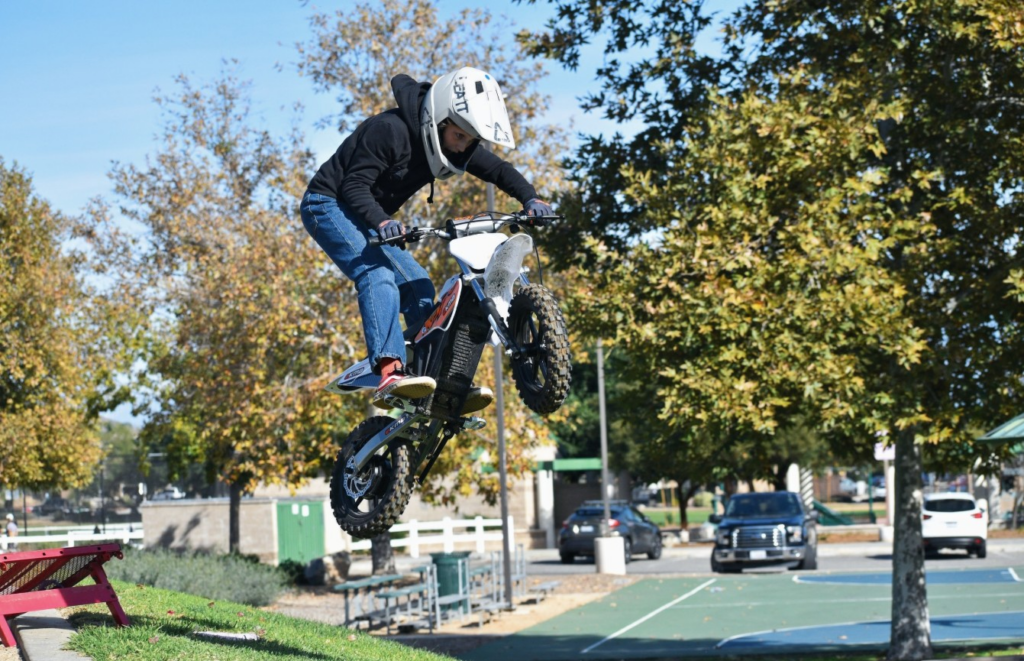
Electric vs Gas Dirt Bikes Kids Can Actually Learn On Safely
Safety is usually the deciding factor for parents, and rightly so. When people search for information on electric vs gas dirt bikes kids should start with, what they’re really asking is: which one lowers the risk while my child is still learning?
Electric bikes tend to be the more forgiving choice for absolute beginners, for a few concrete reasons:
- No clutch complexity. Many electric models are twist-and-go, which removes one entire skill a young rider would otherwise need to master before focusing on balance and steering.
- Adjustable power limits. Parents can often cap top speed through a control setting, gradually increasing it as the child’s confidence and skill grow.
- Quieter operation. A quieter bike means a parent standing nearby can actually hear if something sounds off, and it reduces the sensory overload some younger kids experience with a loud gas engine.
- No hot exhaust components. Gas bikes have exhaust pipes and engine areas that get genuinely hot. This is a real burn risk for young kids who might lean, kick, or fall against the bike.
Gas bikes aren’t inherently unsafe, but they do ask more of a young rider right out of the gate. Clutch and throttle coordination takes time to develop, and a stalled or lurching bike can be more intimidating for a nervous beginner than a smooth electric one.
That said, gas bikes offer one safety advantage electric bikes can’t fully replicate: unlimited “ride time” as long as there’s fuel. There’s no battery anxiety mid-trail, which matters for older or more experienced kids riding farther from home.
Maintenance Reality: What You’re Actually Signing Up For
This is where a lot of parents underestimate the commitment. A dirt bike isn’t a toy you unbox and forget about — it needs upkeep, and the type of upkeep differs sharply between electric and gas models.
Gas dirt bikes require:
- Regular oil changes
- Air filter cleaning or replacement
- Spark plug checks
- Carburetor maintenance in some models
- Fuel system care, especially if the bike sits unused for weeks
- Chain lubrication and tension adjustments
None of this is difficult once you learn it, but it does require time, some basic tools, and a willingness to get your hands dirty. For parents who already enjoy working on small engines or want to teach their kid mechanical skills, this can actually be a bonding opportunity.
Electric dirt bikes require far less routine maintenance. There’s no oil, no fuel system, and no spark plug. Most of the upkeep involves:
- Keeping the battery charged and stored properly
- Checking chain tension (on chain-driven models)
- Basic brake and tire inspection
- Occasional software or firmware checks on newer models
For busy families, this lower-maintenance profile is a major draw. It means more actual riding time and less time troubleshooting a bike that won’t start.
Noise, Neighbors, and Where You Can Actually Ride
This is a practical factor that surprises a lot of first-time buyers. Gas dirt bikes are loud. Even small-displacement youth models produce enough noise to draw attention from neighbors, and many residential areas have noise ordinances that make backyard riding a legal gray area.
Electric bikes solve this almost entirely. Most run at a volume closer to an electric scooter than a motorcycle, which opens up riding locations that would be off-limits for a gas bike — a backyard, a quiet cul-de-sac, or a family property without upsetting anyone nearby. If you live in a neighborhood with tight lot lines or strict HOA rules, this alone might settle the decision.
Spotlight: Kayo EC2I Review for Parents Considering Electric
If you’re researching electric options, you’ve likely come across the Kayo EC2I review conversations happening in dirt bike forums and parent groups. The Kayo EC2I has become a popular reference point for families comparing beginner electric models, and it’s worth understanding why.
The EC2I is designed specifically with new riders in mind. It typically features adjustable power modes, allowing parents to start a child at a low, controlled speed and increase output as skills improve. This progressive power delivery is one of the more parent-friendly features found in modern electric motorcycle youth models, because it removes the all-or-nothing throttle experience that intimidates a lot of first-time riders.
Riders and parents in the youth dirt bike comparison space often point to a few consistent themes with this type of bike:
- Manageable weight for smaller riders, which helps with confidence when picking the bike up after a fall
- Predictable, smooth acceleration that doesn’t punish small throttle mistakes
- Low noise output, making it suitable for practice in yards or open spaces
- Simple charging routine that fits into a normal evening at home
As with any bike, actual specifications and features can vary by model year, so it’s worth confirming current details directly from the manufacturer or a trusted dealer before buying. But the EC2I is a solid example of how far electric youth bikes have come from being seen as “starter toys” to genuinely capable learning machines.
Beginner Dirt Bike Guide: Questions to Ask Before You Buy
Every family’s situation is different, which is why a generic recommendation rarely works. Use this beginner dirt bike guide checklist to figure out which direction fits your household:
- How old is your child, and what’s their attention span like? Younger or less mechanically-minded kids often do better starting on electric, since there’s less to coordinate at once.
- Where will they actually ride? Backyard and neighborhood riding favors electric. Open trail or track access with fuel available nearby makes gas more practical.
- Who’s maintaining the bike? If you’re not interested in learning small-engine maintenance, electric removes that burden almost entirely.
- What’s your noise tolerance situation? Close neighbors or HOA rules can make the decision for you.
- How long do riding sessions typically run? All-day riding at a track leans gas, unless you’re prepared to manage battery swaps.
- Is this a stepping stone or a long-term investment? Some families start electric and transition to gas once a child masters throttle control and wants more range and power.
Answering these honestly will usually point you toward the right choice faster than comparing spec sheets alone.
Which Option Builds Better Long-Term Riding Skills?
There’s a reasonable argument on both sides here. Electric bikes teach balance, throttle control, and body positioning without the added complexity of clutch work, which lets kids build foundational confidence faster. Once that confidence is solid, transitioning to a gas bike with a clutch tends to go more smoothly, because the rider isn’t learning balance and mechanical coordination at the same time.
Gas bikes, meanwhile, teach a broader mechanical skill set from day one. Kids who start on gas often develop a better intuitive understanding of engine behavior, throttle-clutch coordination, and basic maintenance responsibility earlier.
Neither path is wrong. Many experienced riders started on electric, moved to a small automatic gas bike, and eventually graduated to a manual clutch model as their skills matured. Others jumped straight into gas and did just fine with close supervision. What matters more than the starting point is consistent practice, proper safety gear, and a riding environment matched to the child’s current skill level.
Key Takeaways
- Electric dirt bikes are generally easier for young or first-time riders due to simple twist-and-go controls, adjustable speed limits, and quieter operation.
- Gas dirt bikes offer unlimited ride time without battery concerns and teach broader mechanical skills, but require more maintenance and produce more noise.
- Maintenance for gas bikes includes oil changes, filter cleaning, and fuel system care; electric bikes mainly require battery care and basic mechanical checks.
- Noise ordinances and neighborhood restrictions often make electric bikes the more practical choice for backyard or residential riding.
- Models like the Kayo EC2I show how adjustable power modes are making electric youth bikes more beginner-friendly than ever.
- The right choice depends on your child’s age, riding environment, your willingness to handle maintenance, and long-term riding goals.
Conclusion
When it comes down to electric vs gas dirt bikes kids can safely and confidently learn on, there’s no single universal answer — but there is a right answer for your family. Electric bikes tend to suit younger beginners, quieter neighborhoods, and parents who want lower maintenance. Gas bikes suit older kids, open riding spaces, and families who don’t mind investing time into upkeep and mechanical learning.
Whichever direction you choose, prioritize proper safety gear, close supervision during the early riding stages, and a bike genuinely sized for your child rather than one they’ll “grow into” over several years. That approach, more than the power source itself, is what keeps riding both safe and genuinely fun.
FAQs
Is an electric or gas dirt bike better for a first-time young rider?
Electric dirt bikes are generally better for first-time young riders because they use simple twist-and-go controls, have no clutch to learn, and often include adjustable speed limits that let parents control top speed as the child builds confidence.
How long does an electric dirt bike battery last per charge?
Most youth electric dirt bikes run between 45 and 90 minutes per charge, depending on rider weight, terrain, and speed mode used. Charging typically takes a few hours, so families planning full-day rides often invest in a spare battery.
Do gas dirt bikes require more maintenance than electric ones?
Yes. Gas dirt bikes need regular oil changes, air filter cleaning, spark plug checks, and fuel system care. Electric dirt bikes mainly require battery care, basic brake checks, and occasional chain maintenance, making them significantly lower-maintenance overall.
Can neighbors hear an electric dirt bike?
Electric dirt bikes are much quieter than gas models, often comparable to an electric scooter. While not completely silent, they’re far less likely to trigger noise complaints or violate residential noise ordinances than a gas-powered bike.
At what age can a kid start riding a dirt bike?
Many kids start on electric balance-style or beginner electric dirt bikes as young as 3 to 5 years old, while gas-powered youth models are typically introduced once a child is around 7 to 10, depending on size, coordination, and riding experience.