
The first snowfall in Idaho does something to people around here. You can feel it in the parking lots of gas stations along Highway 12, in the way trailers start showing up hitched to trucks before the flakes have even stuck to the ground. For a lot of us, winter isn’t a season to survive — it’s the season we’ve been waiting for. And nowhere is that more obvious than in the world of winter powersports Idaho riders have built for themselves over the last few decades, a scene that’s grown from a handful of backcountry snowmobilers into a full-blown culture of sleds, snow bikes, and everything in between.
If you’ve spent any time near the mountains around Lewiston, Riggins, or up toward McCall, you already know Idaho isn’t just another state with snow. It’s a genuine destination for riders, with terrain that ranges from wide-open meadows perfect for beginners to steep, technical bowls that keep even seasoned mountain riders on their toes. This guide is for anyone trying to make sense of it all — whether you’re picking out your first machine, switching from a snowmobile to a Polaris Timbersled, or just trying to figure out where the good riding actually is.
Why Idaho Has Become a Hub for Winter Powersports
Idaho’s geography is the short answer. You’ve got the Bitterroot and Clearwater mountain ranges cutting through the northern part of the state, the Sawtooths further south, and thousands of acres of national forest land that stay buried in snow from November through April in a good year. That combination of elevation, snowfall, and public land access is rare, and it’s exactly what makes winter powersports Idaho communities have organized around so appealing.
It’s not just about volume of snow, either. Idaho tends to get the kind of dry, light powder that riders chase — the stuff that doesn’t turn into concrete after a week of freeze-thaw cycles like you’ll find in wetter coastal ranges. That’s a big part of why snowmobile clubs and trail groomers in this state put so much work into maintaining groomed systems alongside the ungroomed backcountry zones that off-trail riders crave.
There’s also an infrastructure piece that doesn’t get talked about enough. Towns like Lewiston have become natural staging points for riders heading into the surrounding mountains, with dealerships, service shops, and trail access points close enough together that you can gear up, fuel up, and be on snow within the hour. That convenience matters more than people realize when you’re trying to make the most of a single-day ride.
Snowmobiling in Idaho: Where to Start
Snowmobiling is still the backbone of winter outdoor sports in this state, and for good reason. It’s accessible, the trail systems are extensive, and there’s a machine out there for basically every kind of rider.
Idaho maintains one of the more robust groomed trail networks in the Pacific Northwest, much of it funded through registration fees and maintained by local clubs who put in serious volunteer hours every season. If you’re new to snowmobile Idaho riding, groomed trails are the smart place to start. They’re wider, better marked, and far more forgiving if you’re still getting a feel for how a sled handles in variable snow conditions.
A few things worth knowing if you’re new to sledding in this state:
- Trail permits are required on most groomed systems, and they help fund the grooming operations that keep trails rideable all season.
- Avalanche terrain exists close to trailheads in several popular riding areas, so even groomed-trail riders should understand basic snow safety.
- Fuel range matters more than people expect. Some of the best riding is a genuine distance from the nearest town, and running out of gas twenty miles from a trailhead is a bad way to end a day.
Once riders get comfortable, a lot of them start pushing into the ungroomed backcountry — deep powder bowls, tree runs, and technical sidehilling terrain that Idaho has in abundance. That’s usually around the time riders start hearing about a different kind of machine entirely.
What Is a Timbersled and Why Riders Are Switching
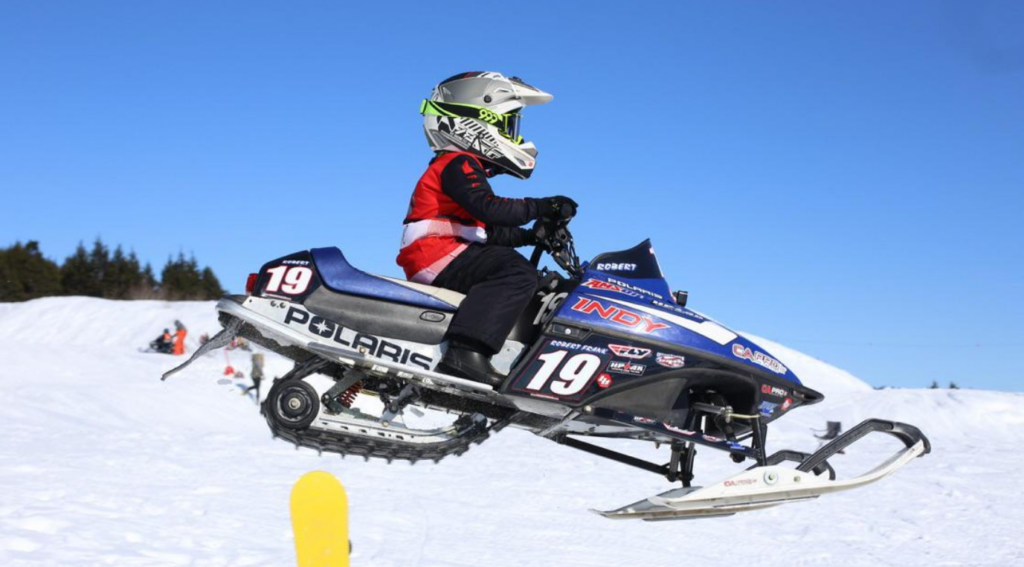
If you’ve been around any trailhead in North Idaho over the past several winters, you’ve probably seen a rider on what looks like a dirt bike with a track and ski system bolted on where the wheels used to be. That’s a snow bike, and the name most associated with the category is Polaris Timbersled.
A Timbersled is technically a conversion kit — it takes a standard dirt bike and swaps the front wheel for a ski and the rear wheel for a track, turning it into a machine built specifically for snow biking. The appeal is pretty simple once you’ve tried it: a snow bike weighs a fraction of what a snowmobile weighs, which means it handles differently in almost every way that matters in technical terrain.
Riders who make the switch usually mention a few specific reasons:
- Maneuverability in tight trees. Snow bikes are narrower and lighter, which makes them noticeably easier to thread through tight timber where a sled would struggle.
- A more natural riding position. Because it’s built on a dirt bike chassis, the body mechanics feel familiar to anyone who’s ridden motocross or trail bikes.
- Better performance on steep, technical terrain. The reduced weight means less momentum working against you when you’re trying to climb or sidehill.
That said, snow biking isn’t automatically “better” than snowmobiling — it’s different, and it rewards a different riding style. Snow bikes generally aren’t the right choice for long groomed-trail cruising or for riders who want to bring a passenger. They shine in tight, technical, physically demanding terrain, which is exactly the kind of terrain Idaho has plenty of.
Finding the Right Timbersled Dealer
If you’re seriously considering winter off-road riding on a snow bike, working with a knowledgeable dealer matters more than it might for a standard snowmobile purchase, mostly because conversion kits require correct setup, suspension tuning, and track alignment to actually perform the way they’re designed to.
A good Timbersled dealer Lewiston riders trust will typically walk you through kit compatibility with your existing dirt bike, help you understand the maintenance differences between a snow bike and a traditional sled, and make sure the conversion is dialed in before you ever hit the trail. This isn’t a bolt-on-and-forget kind of setup — small adjustments to track tension and ski alignment can make a real difference in how the bike handles once you’re actually in the snow.
At Guys Outdoor, this is a conversation our team has almost daily once the weather turns. Riders come in with a dirt bike they already love and want to know whether it’s a good candidate for a conversion, what kind of maintenance schedule to expect, and how the switch from wheels to snow is going to feel the first few rides. Having that guidance upfront tends to save people a season’s worth of trial and error.
Snowmobile vs. Timbersled: Which One Fits Your Riding Style
This question comes up constantly, and honestly, there isn’t a universal right answer — it depends entirely on where and how you like to ride.
Snowmobiles make more sense if you:
- Want to cover long distances on groomed trail systems
- Ride with a passenger regularly
- Prefer a seated, cruiser-style riding position
- Are new to winter powersports and want a more forgiving learning curve
A Timbersled setup makes more sense if you:
- Already ride dirt bikes and want that same body positioning in snow
- Spend most of your time in tight trees or steep technical terrain
- Prioritize agility over top-end speed
- Don’t mind a more physically demanding riding style
Plenty of riders in Idaho end up owning both, using the snowmobile for long backcountry approaches or family rides and the snow bike for the technical stuff once they’re deep in the mountains. It’s less about picking a side and more about matching the machine to the terrain in front of you.
Gearing Up for Idaho Winters
Regardless of which machine you’re riding, Idaho winters don’t forgive underdressed riders. Temperatures in the mountains can swing dramatically from the trailhead to elevation, and wind chill on a moving sled or snow bike is a different animal than standing-still cold.
A few gear basics that experienced riders rarely skip:
- Layered, moisture-wicking base layers rather than a single heavy layer, since riding generates more body heat than people expect until you stop.
- A properly fitted helmet with anti-fog protection, since visibility issues are one of the more common causes of minor incidents on trail.
- Avalanche safety gear — beacon, probe, and shovel — for anyone riding off established groomed trails, along with the training to actually use it.
- Extra layers and emergency supplies packed for the ride, since weather in the mountains can change faster than a forecast updates.
It’s also worth mentioning that gear needs differ meaningfully between snowmobiling and snow biking. The more physical, standing riding position on a Timbersled tends to call for gear with more flexibility and breathability compared to the seated, more insulated setup a lot of snowmobilers prefer.
Where to Ride: Idaho’s Best Winter Powersports Terrain
Idaho’s terrain diversity is honestly one of its biggest selling points for winter off-road riding. The Clearwater and Nez Perce National Forests in North Idaho offer everything from wide, mellow meadows to genuinely technical mountain terrain, and they’re close enough to towns like Lewiston that a day trip is entirely realistic.
Further south and east, areas around McCall and the Sawtooth National Forest bring higher elevations and deeper average snowpack, which tends to draw riders looking for longer season length and more consistent powder conditions. Each region has its own personality — North Idaho leans toward tighter tree riding that suits snow bikes particularly well, while some of the higher-elevation southern terrain opens up into bigger bowls that groomed-trail sledders tend to gravitate toward.
Local clubs and forest service offices are consistently the best source for current trail conditions, closures, and avalanche advisories, and checking in before a ride is a habit worth building regardless of how many seasons you’ve been riding.
Key Takeaways
- Winter powersports Idaho offers has grown around genuinely exceptional terrain, reliable snowfall, and a strong trail infrastructure supported by local clubs.
- Snowmobiling remains the most accessible entry point, especially on Idaho’s extensive groomed trail systems.
- A Polaris Timbersled conversion turns a standard dirt bike into a snow bike, favored for snow biking in tight, technical terrain.
- Proper setup from an experienced Timbersled dealer Lewiston riders recommend can make or break how a conversion performs.
- Gear, avalanche safety, and terrain knowledge matter just as much as the machine itself.
- Many riders end up using both a snowmobile and a snow bike, matching the tool to the terrain rather than picking one permanently.
Conclusion
Idaho earned its reputation in the winter powersports Idaho community the honest way — through terrain that rewards riders who show up prepared, trail systems maintained by people who genuinely care about the sport, and a growing culture that welcomes everyone from first-time sledders to hardened backcountry snow bikers. Whether you’re drawn to the long groomed runs of a traditional snowmobile or the tight, technical agility of a Timbersled, there’s a place for you in these mountains this winter. The best next step is usually the simplest one: talk to people who ride this terrain regularly, get your gear dialed in, and get out there while the snow is good. At Guys Outdoor, that’s a conversation we’re always happy to have, whether you’re outfitting your first sled or converting your favorite dirt bike into a snow machine.
FAQs
What is the best type of powersport for winter riding in Idaho?
It depends on the terrain you prefer. Snowmobiles are better suited for long groomed trails and riding with passengers, while Timbersled snow bikes excel in tight, technical terrain and steep tree riding. Many Idaho riders own both.
What is a Timbersled and how is it different from a snowmobile?
A Timbersled is a conversion kit that replaces a dirt bike’s wheels with a ski and track system, turning it into a snow bike. It’s significantly lighter than a snowmobile and offers a more agile, motocross-style riding experience.
Where can I find groomed snowmobile trails in Idaho?
Idaho maintains extensive groomed trail systems through local snowmobile clubs, particularly around North Idaho’s Clearwater and Nez Perce National Forests and central Idaho near McCall. Trail permits are typically required.
Do I need avalanche safety gear for winter powersports in Idaho?
Yes, if you plan to ride off groomed, established trails. A beacon, probe, and shovel, along with proper training, are considered essential for backcountry snowmobiling or snow biking in Idaho’s mountain terrain.
Can any dirt bike be converted into a Timbersled snow bike?
Most modern dirt bikes are compatible with Timbersled conversion kits, but compatibility and proper setup should be confirmed with an experienced dealer to ensure correct suspension tuning and track alignment.